Strong together: How Cuby connects data and community for sustainable heating solutions
Smart data connections enable the design of heating programs that optimally match the unique context of each neighborhood.
This is possible with Cuby.
Smart data connections enable the design of heating programs that optimally match the unique context of each neighborhood.
This is possible with Cuby.
Thanks to concrete data, residents, policymakers and energy companies can develop better substantiated heat scenarios together.
This helps to create support for a successful heat transition.
The updated dataset of the Planbureau voor de Leefomgeving (PBL), the Start Analysis, provides insight into heating strategies, sources and costs per neighbourhood.
In combination with building data, you can now quickly draw up and calculate realistic heating scenarios.
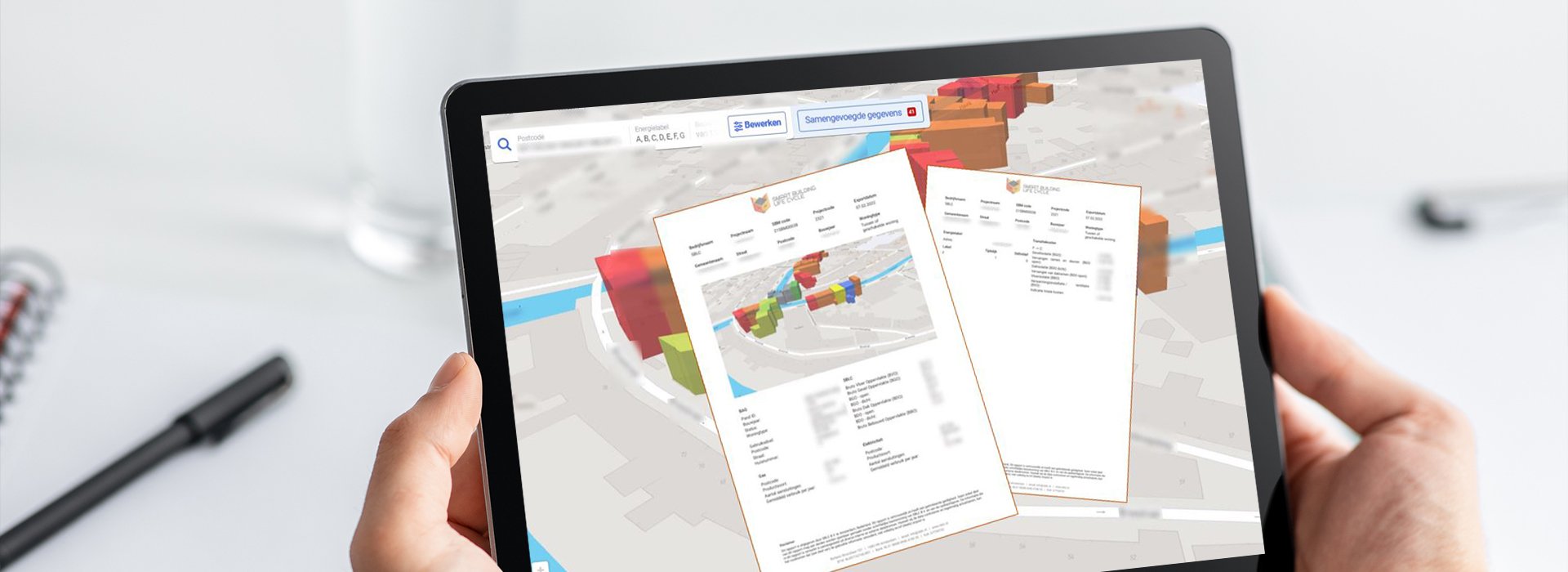
With Cuby you quickly gain insight into building information and cost indications for sustainability per building and per district.
Would you like to know how the building areas are calculated and why the cost indications in Cuby are accurate?
Professionals in the energy transition should make more use of democratic instruments.
Curious which ones they are?
Making homeowners' associations more sustainable is crucial for achieving climate goals and creating future-proof homes, especially in cities with old buildings and high energy costs.
They can contact various organizations for support in the sustainability process.
Collaboration instead of top-down: Cuby also supports citizen initiatives and puts residents at the center of making neighborhood plans. Together we are building a future-proof neighborhood in which everyone feels heard and involved.
Based on information about the district, buildings and the heating network, we can jointly determine and optimize the business case for the heating network. Curious how that works?
Local residents and energy officials often work together for years on a heating plan. With the correct building information and practical key figures, we strive for a technically and financially feasible heating network.
The narrative drawn up by the NLPW offers a perspective for action, provides direction and emphasizes what is essential for the local heat transition. Everyone has a piece of the puzzle in their hands.
But how do you ensure that the information puzzle is successfully completed?
Energy officials play an essential role in creating a sustainable energy future for municipalities.
Access to crucial technical information is very important for the construction of heating networks.
Aquathermal energy is a promising technology to generate sustainable heat. This article highlights the 'lessons learned' and tips when setting up aquathermal projects.
At the Congrestival, two striking parallel sessions were held on the introduction of the Collective Heat Act (WcW) in 2025. These sessions discussed what the WcW means for the roles and responsibilities of participants in the generation, transport and release of sustainably generated heat.
In the election results, the majority of the voters seem to say: ‘Stop right here and take time to reconsider!'
But there are certainly scenarios that we can still tackle.
Did you know that SBLC can help directors of homeowners' associations transform their buildings into affordable, comfortable, greener and future-proof assets?
Read more to find out how we do that.
The use of energy coaches is a valuable strategy to include individual homeowners in the energy transition. But how do you motivate the residents?
The New Effective Step-by-Step Plan for Energy Coaches can help them with this.
Energy coaches are an important tool in the transition to sustainable homes. They have a bridge function towards residents. The challenge for energy coaches is to be able to make the sustainability options really concrete for residents.
An energy coach who is well prepared can really make the difference.
The Dutch Association for Sustainable Energy advocates tackling entire neighborhoods at once instead of per home. That is indeed much needed. But how do you shape that in your Neighborhood Implementation Plan in which you deal with home owners, executive companies and subsidy providers?
With Earth Valley to the Intergeo 2022 in Germany
SBLC explores the approach to the energy transition in Germany on a trade mission from Earth Valley to the Intergeo fair in Essen. The conclusion is that there are opportunities for Cuby, particularly in the Ruhr area, with a focus on reducing the CO2 footprint of homes.
Report of the meeting
On Thursday 26th of January, SBLC was one of the ten companies that were allowed to participate in the theme market "Digital tools for the expiry of citizen participation in the energy transition" of Province of Overijssel.
It was an extremely inspiring meeting.
Unfortunately, in recent weeks, the news and in the newspapers have been talking about nothing but more than the energy crisis. Gas and electricity are unprecedentedly expensive, energy poverty is over and will only increase in the near future. What can the government, companies and individuals do to get through this crisis in the best possible way?
Cuby can help with that!
We use cookies to improve your experience. Read more